

Guided unlocking and a new trip profile: youMove bike sharing moves up a gear
Release date: today
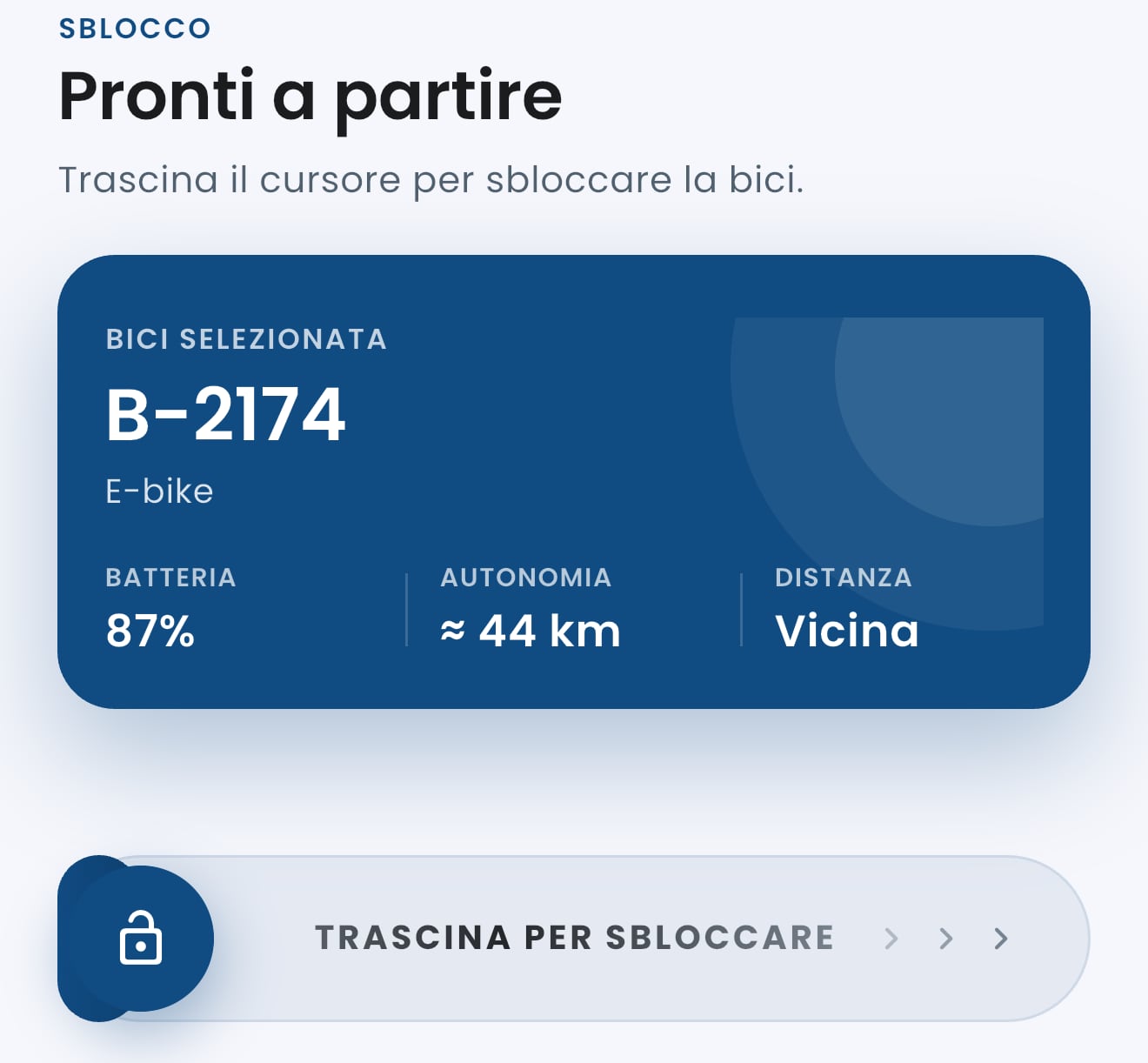
When bike sharing works, you can tell from two precise moments. The first is unlocking the bike: it must be clear, smooth, with no hesitation in front of the rack. The second is closing the trip: the user wants to understand what they did — where they went, how much they pedaled, what impact they had. These are the two points where a service becomes an experience, or remains just a way to move around.
Today we are releasing an update that focuses exactly on these two moments.
Guided unlocking: no more guessing
The bike sharing unlock experience has been redesigned from the ground up. Before activating the bike, the user is guided through a detailed description of the steps to follow, shown in the app with simple language and a visual reference for each step. What to do, in what order, where to look, what to expect: everything is clarified before the user's hands get involved.
The final step is a new unlock mechanic: "slide to unlock." An intentional gesture — not an accidental tap — that confirms to both the user and the system that the trip is truly starting.
Why we worked on it:
- It reduces first-unlock errors. Anyone taking a shared bike for the first time faces a small "exam" in just a few seconds: where do I stand, what do I press, how does it detach. The step-by-step guide lowers the first-use barrier, the moment when a sharing service loses half of its potential users.
- It reduces support calls. Requests about "I cannot unlock the bike" have historically been the leading reason for contacting customer support. A well-designed guided procedure drains that flow.
- It reduces accidental unlocks. The sliding gesture is deliberately more demanding than a tap. In practical terms: fewer rentals opened by mistake, fewer forced closures, less frustration.
It is a small change in pixels, a large change in operational metrics.
New trip profile: the value of afterwards
The second block of improvements concerns the trip profile, the screen the user sees at the end of a ride. Previously it was an essential summary screen: times, duration, cost. From today it becomes a true trip page, with three new pieces of information that change the quality of the experience:
1. GPS route
The actual route is traced on the map and shown to the user. It is not a decorative extra: it is an emotional reminder of the trip just completed, and for sharing projects in tourist cities or on urban cycling routes it is also a natural vehicle for storytelling and sharing. The user knows where they went, sees the route, and can compare it with their own rides in the following days.
2. Environmental statistics
How much CO₂ you avoided emitting by using a bike instead of a car. The estimate is calculated from the real kilometers traveled, according to standard sector conversion factors. For municipalities and organizations that manage sharing services, it is also a figure that can be aggregated at city level: understanding how much carbon dioxide a bike sharing service is avoiding in a month or a year is a concrete argument to support investments and mobility policies.
3. Calories burned (estimate)
How many calories you burned during this trip. An estimate, of course — this is not a fitness device — but enough to connect the "wellness" dimension to bike use. For many users, a shared bike is not only a means of transport: it is also a small opportunity for daily movement, and showing it as a number makes that value tangible.
Why these two updates arrive together
The two interventions — guided unlocking at the start, rich trip profile at the end — are not random. They are the two edges of the rental experience, the only moments when the user has time and attention to absorb information. In between, during the ride, they should only pedal.
Doing these two moments well means:
- lowering entry friction for new users,
- increasing the perceived value of completed trips,
- generating aggregated data (km, CO₂ avoided, calories) that also makes sense outside the app — in operator dashboards, periodic reports to municipalities, and service communications.
Bike sharing is a sector where margins are thin and every detail of the experience matters. This release moves both edges in the right direction.
The update is available from today for all active bike sharing services on the youMove Bike platform.